



Mazda Hybrid Ownership for Coachella Valley
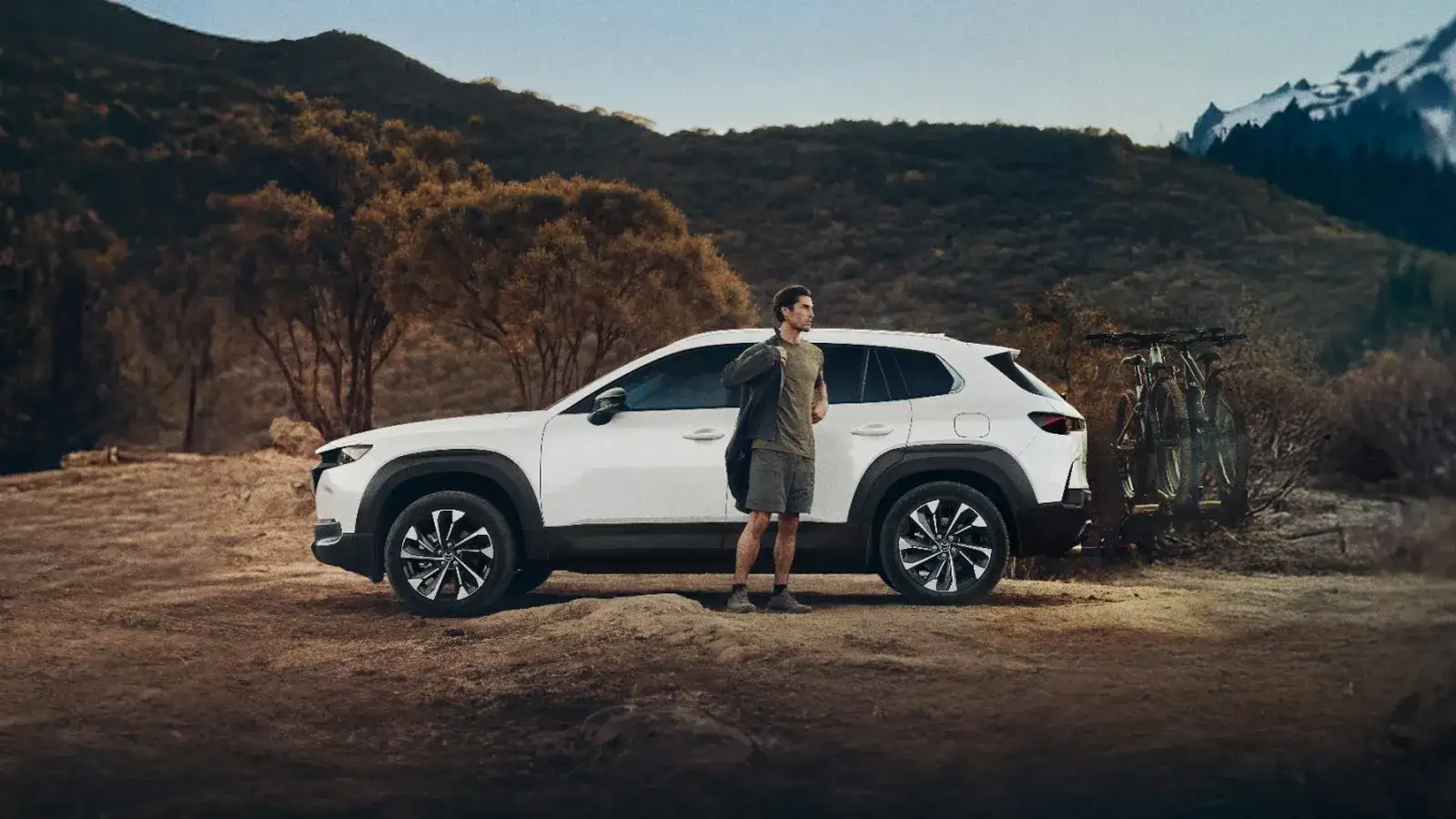
A commute from Palm Desert to Rancho Mirage can look very different from a weekend drive up Highway 74 or a school run across Cathedral City. That is why Mazda hybrid ownership is less about choosing the vehicle with the biggest efficiency claim and more about choosing the powertrain that fits how your family actually moves through the Coachella Valley.
Mazda currently gives hybrid-curious drivers two distinct paths. The CX-50 Hybrid is a conventional hybrid that manages electric and gas power on its own. The CX-70 PHEV and CX-90 PHEV are plug-in hybrids that can cover many shorter trips on battery power, then continue on gasoline for longer drives. Both approaches reduce fuel use, but the right choice depends on your access to charging, daily mileage, passenger needs, and driving routine.
What Mazda Hybrid Ownership Looks Like Day to Day
A traditional hybrid such as the CX-50 Hybrid is designed for drivers who want better efficiency without changing habits. There is no charging cable to manage and no charging schedule to remember. You fill up with gasoline as usual, while the vehicle captures energy during braking and uses its battery and electric motor to support efficient driving, especially in slower traffic.
That can make sense for a household that spends plenty of time on city streets in Indio, La Quinta, or Palm Springs, but also takes regular highway trips. The transition between electric assistance and gasoline power happens automatically. For many shoppers, that simplicity is the biggest benefit of a conventional hybrid.
A Mazda plug-in hybrid asks a little more of its owner, but can give more back when it is used as intended. The CX-70 PHEV and CX-90 PHEV have a larger battery that can be charged externally. With a full charge, their all-electric driving range is intended to handle many local errands and commutes before the gasoline engine is needed. When the battery charge is lower or extra power is required, the gas engine steps in, so there is no need to plan every trip around a public charger.
The key question is straightforward: can you charge regularly where you live or work? If the answer is yes, a plug-in hybrid can make your daily driving feel meaningfully different. If charging would be occasional or inconvenient, the CX-50 Hybrid may deliver a more satisfying ownership experience because it still brings efficiency without requiring a new routine.
Mazda Hybrid Ownership: Hybrid vs. Plug-In Hybrid
The choice between these Mazda options is not a contest between good and better. It is a matter of fit.
The CX-50 Hybrid is a strong match for drivers who want a compact SUV with flexible cargo space, confident road manners, and reduced fuel stops. It is especially practical for apartment residents, households without dedicated parking, or people whose schedules vary too much for reliable home charging. You simply drive it.
The CX-70 PHEV adds a larger, two-row SUV format with generous room for passengers and gear. The CX-90 PHEV brings a three-row layout for families who need more seating. Both are worth a close look for households that can plug in overnight and want to use electric power for the daily loop around town while retaining the freedom to head to Los Angeles, San Diego, or beyond without range anxiety.
A plug-in hybrid is not automatically the more efficient choice in every situation. Owners get the strongest benefit when they charge often and take many shorter trips. If most of your miles are long highway drives with little opportunity to charge, a conventional hybrid can be the more natural fit. A conversation about your weekly mileage, parking setup, and family seating needs can clarify the decision quickly.
Charging a Mazda PHEV in Desert Heat
Coachella Valley heat is a real ownership consideration, not a reason to rule out a plug-in hybrid. Like any vehicle battery, a PHEV battery can be affected by very high or very low temperatures. You may see changes in electric-only range during the hottest parts of summer, particularly if the cabin has been sitting in direct sun and air conditioning is working hard.
That does not mean you need to treat the vehicle delicately. It means building a few sensible habits. Charging overnight when temperatures are lower can be helpful. Parking in a garage, under shade, or with a windshield sunshade can make the cabin more comfortable and reduce the immediate load on climate control. Preconditioning the cabin while the vehicle is plugged in can also help preserve battery energy for driving, if your model and charging setup support it.
Many PHEV owners use Level 1 charging from a standard household outlet when their schedule allows, while a professionally installed Level 2 charger can shorten charging time at home. The best setup depends on how much you drive between charging sessions. A dealer team can help you understand vehicle charging capability and what questions to ask a qualified home charging installer.
Ownership Costs Are About More Than Fuel
Hybrids and plug-in hybrids can reduce fuel consumption, but ownership value also comes from routine care, warranty coverage, resale confidence, and keeping the right vehicle for your needs. Mazda vehicles are built around a connected driving feel, so a hybrid should still feel like a Mazda when you merge onto Interstate 10 or take a winding desert road.
PHEV ownership also includes the value of flexibility. A charged battery can cover local driving with less gasoline use, while the engine gives your household a backup plan for long-distance travel. For families who do not want a second vehicle solely for road trips, that combination can be appealing.
New versus Mazda Certified Pre-Owned is another useful comparison. A new hybrid or PHEV may have the latest features and full new-vehicle coverage. A Mazda Certified Pre-Owned vehicle can be a smart option for value-focused shoppers who want an inspected Mazda with added confidence. Availability changes, particularly for electrified models, so it is worth comparing the vehicles currently available rather than assuming one route always fits best.
Maintenance Still Matters, Even With Electric Assistance
Hybrid ownership does not eliminate maintenance. It changes some of the conversation. Regenerative braking can reduce wear on brake components because the electric system helps slow the vehicle, but brake inspections remain essential. Tires, wiper blades, cabin air filters, coolant, fluids, and software updates still deserve regular attention.
Desert driving adds its own maintenance priorities. Extreme heat, dust, and long stretches of highway driving make tire condition and proper inflation especially important. The heat can also be hard on conventional 12-volt batteries, so routine inspections are wise. Follow the maintenance schedule in your owner’s manual and let factory-trained technicians inspect the hybrid system with the tools and procedures designed for Mazda vehicles.
You do not need to be an EV expert to own a hybrid or PHEV confidently. What matters is knowing the difference between scheduled maintenance and warning signs that deserve a prompt visit. A dashboard message related to the hybrid system, charging system, or battery should be evaluated rather than ignored. Regular service visits are also a good time to ask practical questions about charging habits, brake life, tire wear, or changes you have noticed in efficiency.
Safety and Family Confidence
For many Coachella Valley households, choosing a hybrid SUV is also a family safety decision. Mazda’s driver-assistance technology, often grouped under the i-Activsense name, is designed to support awareness with features that may include smart brake support, blind spot monitoring, lane support, and available camera technology, depending on model and trim.
These features are helpful, but they do not replace an attentive driver. The best safety technology supports good habits: leaving room in traffic, scanning intersections, adjusting speed for conditions, and keeping tires properly maintained. Families comparing the CX-50 Hybrid with the larger CX-70 PHEV or CX-90 PHEV should also sit in each vehicle with the people, car seats, and gear they use most. The right fit is about more than a spec sheet.
A test drive should include the roads you know. Check visibility in bright desert sun, try the second or third row if applicable, and experience how the vehicle responds when entering traffic. That kind of real-world comparison often tells you more than a single efficiency number.
Whether you prefer the no-plug convenience of the CX-50 Hybrid or the charging flexibility of a CX-70 or CX-90 PHEV, start with your normal week rather than an idealized one. Palm Springs Mazda can help you compare available vehicles, discuss financing options, and arrange factory-trained service long after the keys are in your hand.
Frequently Asked Questions
Is a Mazda hybrid or PHEV a good fit for summer driving in the Coachella Valley?
Yes, as long as you build simple heat habits. Park in a garage or shade when you can, use a windshield sunshade, and charge a PHEV during cooler overnight hours. Expect electric-only range to vary on the hottest days while the air conditioning works hard. Palm Springs Mazda can walk you through how the CX-50 Hybrid, CX-70 PHEV and CX-90 PHEV handle desert conditions.
Do I need a home charger to own a Mazda CX-70 PHEV or CX-90 PHEV?
No. Mazda includes a portable Level 1 cable that plugs into a standard 120-volt household outlet, which suits many overnight routines. A professionally installed Level 2 charger shortens charging time if your schedule is tight. If you rent or park in a shared lot in Palm Springs or Cathedral City, ask your property manager about outlet access before you buy.
Which Mazda hybrid has the most seating for a family?
The CX-90 PHEV is the three-row option in the Mazda lineup, so it is the one to consider when you regularly carry more than five people. The CX-70 PHEV and the CX-50 Hybrid are two-row SUVs. Bring car seats and your usual gear to Palm Springs Mazda in Cathedral City and try each layout before you decide.
Can I drive a Mazda PHEV to Los Angeles or San Diego without stopping to charge?
Yes. When the battery is depleted, the gasoline engine keeps the vehicle running like a conventional hybrid, so a longer drive on I-10 does not depend on public chargers. You simply refuel as usual. Charging still matters for local driving, because daily electric miles are where a plug-in hybrid saves the most fuel.
0 comment(s) so far on Mazda Hybrid Ownership for Coachella Valley